Chinese
 English
 français
 Deutsch
 español
 português
 Nederlands
 日本語
日本語 한국의
한국의




- Come scegliere un miscelatore per impasto di batterie per la produzione industriale
- Processi di impilamento e avvolgimento delle batterie nell'assemblaggio delle celle batteria
- Una roadmap tecnica dalla linea di laboratorio per batterie e dalla linea pilota alle soluzioni per linee di produzione di batterie su larga scala
- TOB NEW ENERGY: fornitore cinese integrato di soluzioni per batterie, apparecchiature e materiali per linee di produzione chiavi in mano
- Ingegnere senior di TOB nominato mentore laureato dell'industria CSU
Guida alla selezione degli elettroliti per batterie: cosa devono sapere i responsabili degli acquisti
L'elettrolita viene spesso definito il "sangue" di una cella agli ioni di litio. Quando la sua formulazione non è perfettamente corretta (eccesso di umidità, concentrazione insufficiente di additivi, sale di litio errato), la cella non solo non funziona a dovere, ma si guasta. A volte in modo sicuro, con un rapido decadimento della capacità. Altre volte in modo catastrofico, con la formazione di gas e un'instabilità termica incontrollata.
Per i responsabili degli acquisti, l'elettrolita rappresenta una sfida di approvvigionamento particolarmente complessa. Non si tratta di una merce standardizzata. Piccole variazioni di purezza, contenuto d'acqua o composizione degli additivi possono prolungare la durata del ciclo di vita di centinaia di cicli. La qualificazione dei fornitori non è una mera formalità burocratica, ma un problema di tracciabilità chimica.
Questa guida traduce le specifiche tecniche in criteri decisionali rilevanti per gli appalti: cosa par Parametri da specificare, come confrontare i sali di litio e cosa verificare quando si seleziona un fornitore di elettroliti di grado batteria per la produzione di celle agli ioni di litio.
Parametri critici di qualità: cosa deve includere la scheda tecnica
La qualità degli elettroliti è definita da un breve elenco di parametri misurabili. Se un fornitore non è in grado di fornire valori certificati per tutti e sei i parametri, la procedura di qualificazione dovrebbe essere sospesa immediatamente.
Specifiche principali e conseguenze del guasto
| Parametro | Standard industriale (basato su LiPF6) | Conseguenza se fuori specifica |
| Acqua (H₂O) | ≤ 10 ppm | L'idrolisi del LiPF6 produce HF, che attacca la superficie del catodo e dissolve i metalli di transizione. Il decadimento della capacità accelera bruscamente. |
| Acido libero (come HF) | ≤ 50 ppm | L'elevato contenuto acido corrode il collettore di corrente e degrada lo strato SEI. La stabilità ciclica crolla entro 100 cicli. |
| Purezza (LiPF6) | ≥ 99,95% | Le impurità di metalli in tracce (Fe, Na, K) catalizzano la decomposizione dell'elettrolita e favoriscono i cortocircuiti interni. |
| Densità (25°C) | 1,20–1,30 g/cm³ (varia a seconda della formulazione) | Le deviazioni di densità indicano errori nel rapporto tra i solventi, che alterano la viscosità e il comportamento di bagnatura. |
| Colore (APHA) | ≤ 15 | Un colore superiore a 20 Hazen indica la presenza di impurità organiche o prodotti di degradazione, anche se gli altri parametri risultano nella norma. |
| Cloruro (Cl⁻) | ≤ 1 ppm | La contaminazione da cloruri accelera la corrosione dei collettori di corrente in alluminio, soprattutto ad alta tensione. |
La specifica relativa all'acqua non è negoziabile. L'elettrolita esposto all'aria ambiente durante il confezionamento o il campionamento assorbe umidità in pochi secondi. I fornitori sprovvisti di sistemi di riempimento a circuito chiuso con atmosfera di argon non possono garantire il rispetto della soglia <10 ppm.
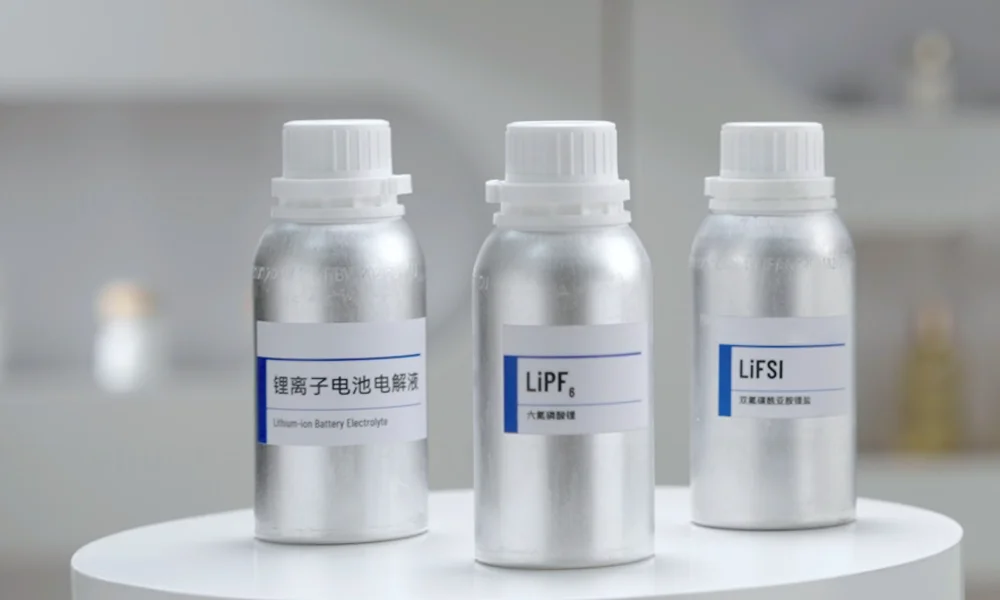
Selezione del sale di litio: LiPF6 vs. LiBOB vs. LiTFSI
Il sale di litio costituisce il nucleo funzionale dell'elettrolita. La sua scelta determina l'intervallo di tensione, l'intervallo di temperatura e il comportamento in termini di sicurezza. Il reparto acquisti deve comprendere i compromessi, poiché il sale influenza il costo della materia prima, la disponibilità e la complessità della formulazione.
Matrice comparativa di prestazioni e costi
| Sale | Stabilità della tensione | Stabilità termica | Conduttività | Indice dei costi (relativo al LiPF6) | Migliore applicazione |
| LiPF6 | Funziona fino a 4,3 V | Si decompone al di sopra dei 60 °C in presenza di umidità. | Massimo (10–12 mS/cm) | 1.0x (baseline) | Celle standard NMC, LFP, LCO; tutte le applicazioni in cui il costo è il fattore determinante. |
| LiBOB | Eccellente fino a 4,5 V | Stabile fino a 70 °C; forma un robusto strato SEI. | Moderato (6–8 mS/cm) | 1,8–2,2x | NMC ad alta tensione (>4,4 V), funzionamento ad alta temperatura, lunga durata del calendario |
| LiTFSI | Finestra più ampia (>5V) | Eccellente fino a 80 °C; nessuna generazione di HF | Alto (9–11 mS/cm) | 3,0–4,5x | Elettroliti liquidi ionici allo stato solido, sistemi ad alta tensione; limitati dalla corrosione dell'alluminio senza additivi |
Guida pratica per gli appalti:
- Il LiPF6 rimane il sale di riferimento per oltre il 90% della produzione commerciale di batterie agli ioni di litio. La catena di approvvigionamento è consolidata, con numerosi fornitori qualificati a livello globale. La stabilità dei costi è determinata dai mercati del carbonato di litio e delle materie prime a base di HF.
- Il LiBOB viene utilizzato come sale primario o additivo quando l'applicazione richiede una maggiore durata del ciclo a temperature elevate o una tensione di cutoff superiore più alta. Il sovrapprezzo dell'80-120% ne limita l'adozione ad applicazioni specifiche di alto valore.
- Il LiTFSI è un sale speciale per elettroliti di nuova generazione. La sua adozione è attualmente limitata non dalle prestazioni, bensì dalla sua interazione corrosiva con i collettori di corrente in alluminio a tensioni superiori a 3,7 V, a meno che non vengano incorporati specifici additivi inibitori di corrosione.
Per i team di approvvigionamento che si riforniscono di uno qualsiasi di questi sali sotto forma di elettrolita, il fornitore deve essere in grado di dimostrare la purezza del sale e i dati di compatibilità con i solventi. UN Elettrolita LiPF6 Per l'approvvigionamento all'ingrosso di batterie agli ioni di litio sono richiesti rapporti di prova che mostrino il contenuto di HF dopo un invecchiamento accelerato a 60 °C per 7 giorni.
Sistemi solventi e pacchetti di additivi: ottimizzazione delle prestazioni
La miscela di solventi e il pacchetto di additivi costituiscono la proprietà intellettuale della formulazione dell'elettrolita. I responsabili degli acquisti non devono necessariamente diventare elettrochimici, ma devono comprendere il nesso tra costi e prestazioni.
Sistemi di solventi comuni
| Sistema di solventi | Punto di congelamento | Punto di ebollizione | Viscosità | Costo relativo | Applicazione tipica |
| EC:DMC (1:1) | -5°C | 90 °C (DMC) | Basso | 1.0x | Linea di base standard dell'elettrolita carbonato |
| CE:EMC (1:1) | -15°C | 110 °C (EMC) | Mezzo | 1,2x | Migliori prestazioni a basse temperature, celle per uso domestico |
| EC:DMC:DEC (1:1:1) | -20°C | Divas | Basso-medio | 1,3x | Applicazioni in un ampio intervallo di temperature, celle per veicoli elettrici |
| EC:PC:EMC | -30°C | Divas | Mezzo | 1,5x | Funzionamento a temperature estremamente basse, settore militare/aerospaziale |
Additivi funzionali e il loro scopo
| Additivo | Concentrazione tipica | Funzione | Impatto sui costi |
| FEC (carbonato di fluoroetilene) | 2–10% in peso | Forma uno strato SEI stabile sugli anodi di silicio; essenziale per le celle ad alto contenuto di silicio | Mezzo |
| VC (carbonato di vinilene) | 1–3% in peso | Additivo sacrificale per la formazione di SEI su anodi di grafite; riduce le perdite al primo ciclo | Basso |
| PS (1,3-Propano Sultone) | 0,5–2% in peso | Sopprime la generazione di gas ad alta tensione; migliora la sicurezza | Medio-Alto |
| LiBOB (come additivo) | 0,5–2% in peso | Migliora la stabilità ad alta tensione e riduce la dissoluzione dei metalli di transizione | Alto |
| DTD (solfato di etilene) | 0,5–1% in peso | Migliora le prestazioni e la capacità di funzionamento a basse temperature. | Mezzo |
La formulazione personalizzata è standard per qualsiasi cella di produzione. Gli elettroliti generici standard raramente corrispondono alla specifica chimica degli elettrodi. Il costo di un pacchetto di additivi su misura, in genere compreso tra 0,50 e 2,00 dollari al litro, è trascurabile rispetto alla durata del ciclo e al margine di sicurezza ottenuti.
Approfondimenti sugli acquisti: L'elettrolita non è un prodotto chimico da acquistare e conservare. Si degrada nel tempo, in particolare le formulazioni a base di LiPF6. La durata di conservazione è di 3-6 mesi in condizioni sigillate e refrigerate (5-10 °C). L'acquisto all'ingrosso senza una comprovata capacità di stoccaggio e una logistica FIFO (first-in-first-out) genera sprechi. Un produttore diretto di elettroliti per batterie personalizzati e in grado di fornire grandi quantità di prodotto può offrire programmi di produzione just-in-time allineati con la cadenza di produzione delle celle, minimizzando il rischio di degrado delle scorte.
Criteri di verifica dei fornitori: cosa distingue i fornitori qualificati da quelli non qualificati?
La verifica di un fornitore di elettroliti non riguarda solo la chimica, ma anche la disciplina produttiva.
Punti chiave dell'audit per i team di approvvigionamento
- Tracciabilità delle materie prime: ogni sale, solvente e additivo in entrata deve essere accompagnato da un certificato di analisi (COA) collegato a uno specifico numero di lotto. Il fornitore deve conservare i campioni di riferimento per almeno 24 mesi.
- Controllo dell'acqua durante la produzione: la formulazione degli elettroliti deve avvenire in atmosfera di argon o azoto con monitoraggio continuo dell'umidità. L'ambiente target è: punto di rugiada < -60 °C, H₂O < 1 ppm nei recipienti di processo.
- Integrità di riempimento e confezionamento: l'elettrolita finito deve essere riempito in fusti di acciaio rivestiti elettroforeticamente o in contenitori in HDPE fluorurato in atmosfera inerte. Lo spazio di testa deve essere spurgato e sigillato. I fornitori che utilizzano contenitori chimici standard senza atmosfera inerte introducono immediatamente umidità.
- Test di uniformità del lotto: ogni lotto deve essere testato per i parametri indicati nella tabella delle specifiche sopra riportata. I rapporti di prova devono essere riconducibili ai registri di calibrazione degli strumenti. Un fornitore che si rifiuta di condividere i certificati di calibrazione rappresenta un segnale di allarme.
- Capacità di formulazione personalizzata: un vero partner di produzione è in grado di adattare i rapporti dei solventi e le concentrazioni degli additivi in base alla chimica degli elettrodi del cliente, non limitandosi a vendere formulazioni premiscelate. Ciò richiede capacità di ricerca e sviluppo interne, non solo apparecchiature di miscelazione.
- Logistica e catena del freddo: per le spedizioni di elettroliti sfusi, è necessaria una logistica a temperatura controllata (5–15 °C) durante il trasporto. I fornitori devono fornire i dati di registrazione della temperatura dalla spedizione alla consegna.
Strategia di approvvigionamento: dal laboratorio alla produzione di massa
Le specifiche dell'elettrolita si evolvono man mano che la progettazione di una cella passa dalla fase di ricerca e sviluppo alla fase pilota e infine alla produzione di massa. La strategia di approvvigionamento deve essere adeguata a questa fase.
- Fase di ricerca e sviluppo: formulazioni personalizzate in piccole quantità (1-10 litri). La flessibilità del fornitore e la rapidità di riformulazione sono fondamentali. Il costo per litro è secondario.
- Fase pilota: Lotti di medie dimensioni (100-1.000 litri). La coerenza tra i lotti diventa misurabile. I sistemi di qualità dei fornitori diventano il principale elemento di differenziazione.
- Fase di produzione di massa: approvvigionamento all'ingrosso (oltre 10.000 litri al mese). Prezzo, sicurezza dell'approvvigionamento e integrazione logistica sono i fattori predominanti. L'approvvigionamento da due fornitori qualificati con formulazione identica è una pratica standard di gestione del rischio.
Domande frequenti (FAQ)
D: Qual è il contenuto d'acqua accettabile per l'elettrolita a base di LiPF6 al momento della consegna?
A: ≤ 10 ppm. Valori superiori a 15 ppm indicano controlli di produzione inadeguati o ingresso di umidità durante l'imballaggio e il trasporto. Rifiutare il lotto o negoziare una riduzione del prezzo con documentazione delle misure di rimozione dell'HF.
D: Per quanto tempo si può conservare l'elettrolita prima dell'uso?
A: Elettrolita a base di LiPF6: 3–6 mesi in contenitori sigillati a 5–10°C in atmosfera inerte. Formulazioni a base di LiBOB e LiTFSI: 6–12 mesi in condizioni identiche. La durata di conservazione deve essere convalidata dal fornitore tramite test di invecchiamento accelerato.
D: Il LiTFSI può sostituire il LiPF6 nelle celle agli ioni di litio standard?
R: Non senza modifiche. Il LiTFSI corrode i collettori di corrente in alluminio a potenziali superiori a 3,7 V. A meno che la formulazione dell'elettrolita non includa specifici inibitori di corrosione (ad esempio, l'additivo LiPF6 a 0,1–0,5 M o altri agenti passivanti per l'alluminio), gli elettroliti a base di LiTFSI sono limitati a sistemi a bassa tensione o a stato solido.
D: Qual è la quantità minima d'ordine (MOQ) per le formulazioni di elettroliti personalizzate?
R: Varia a seconda del fornitore. Alcuni produttori di elettroliti specializzati accettano quantitativi minimi d'ordine (MOQ) di soli 5-10 litri per scopi di ricerca e sviluppo. Per ordini di grandi quantità destinati alla produzione, i MOQ partono in genere da 500-1.000 litri. Le fabbriche che producono direttamente elettroliti personalizzati per batterie possono gestire quantitativi su scala pilota con minimi flessibili.
Pronti a garantire la sicurezza della vostra catena di approvvigionamento di elettroliti?
L'approvvigionamento di elettroliti non è una semplice transazione commerciale. Si tratta di una partnership strategica con un fornitore di prodotti chimici che ha un impatto diretto sulle prestazioni, la sicurezza e la responsabilità in garanzia delle celle. La differenza tra un fornitore che rilascia un certificato di analisi e uno che offre tracciabilità a livello di lotto, supporto per formulazioni personalizzate e logistica a catena del freddo con prodotti sigillati si misura in termini di durata del ciclo, resa e affidabilità sul campo.TOB New Energy fornisce batterie di grado LiPF6 , LiBOB , E LiTFSI Elettroliti in formulazioni personalizzate per la ricerca e sviluppo di celle a bottone, fino alla produzione di massa. Ogni spedizione include dati certificati relativi a umidità, acidità libera e purezza, tracciabili tramite registri di calibrazione degli strumenti. Richiedete specifiche, prezzi e consulenza per formulazioni personalizzate degli elettroliti.
Questa guida tecnica è stata preparata dal team di ingegneria di processo presso TOB New Energy , una fabbrica di approvvigionamento diretto di materiali e attrezzature per batterie al litio da Xiamen, Cina. Tutti i prodotti elettrolitici vengono formulati, testati e confezionati in atmosfera di argon in camere bianche certificate ISO.
 iscriviti a noi