Chinese
 English
 français
 Deutsch
 español
 português
 Nederlands
 日本語
日本語 한국의
한국의




- Come scegliere un miscelatore per impasto di batterie per la produzione industriale
- Processi di impilamento e avvolgimento delle batterie nell'assemblaggio delle celle batteria
- Una roadmap tecnica dalla linea di laboratorio per batterie e dalla linea pilota alle soluzioni per linee di produzione di batterie su larga scala
- TOB NEW ENERGY: fornitore cinese integrato di soluzioni per batterie, apparecchiature e materiali per linee di produzione chiavi in mano
- Ingegnere senior di TOB nominato mentore laureato dell'industria CSU
Attrezzatura da laboratorio per batterie a bottone: la lista di controllo completa per i laboratori di ricerca e sviluppo sulle batterie.
Un laboratorio di ricerca e sviluppo sulle batterie che spende 80.000 dollari in camere a guanti può comunque non riuscire a produrre una batteria a bottone con capacità costante.
Il problema raramente è il budget. È la sequenza delle operazioni.
La camera a guanti viene acquistata per prima perché rappresenta la credenziale per la camera bianca. Poi la realtà si abbatte su di noi: il miscelatore per impasti non riesce a disperdere il nerofumo in agglomerati di dimensioni inferiori a 5 μm. La lama di rivestimento ha un'eccentricità di 20 μm. La pressa deforma la bomboletta. Tre mesi di ricerca svaniscono nel nulla a causa di difetti delle apparecchiature mascherati da problemi dei materiali.
Di seguito è riportata una checklist, postazione di lavoro per postazione, per la realizzazione di semicelle CR2032 riproducibili, con specifiche critiche, punti di guasto comuni e criteri di selezione per ogni componente.
Flusso di lavoro delle batterie a bottone: una mappa sequenziale delle apparecchiature.
Una pila a bottone CR2032 è strutturalmente semplice: involucro del catodo, disco del catodo, separatore, anodo di litio, distanziatore, molla, cappuccio dell'anodo. Crimpatura. Fatto.
In pratica, ogni fase prevede una modalità di guasto con tolleranze molto ristrette. Una macchina con specifiche insufficienti innesca una reazione a catena di errori che si propagano all'intera cella.
1. Miscelazione di sospensioni: la dispersione determina tutto
La qualità della sospensione è determinata da tre parametri: uniformità della dispersione delle particelle, viscosità entro l'intervallo target (3.000–8.000 mPa·s per la maggior parte delle sospensioni NMC) e assenza di aria inglobata.
Specifiche minime indispensabili per le apparecchiature:
|
Attrezzatura |
Specifiche richieste |
Conseguenza di specifiche inadeguate |
|
equilibrio di precisione |
Risoluzione di 0,1 mg |
La percentuale di materiale attivo varia di ±2%. La dispersione della capacità ne consegue direttamente. |
|
Miscelatore planetario sottovuoto |
Capacità da 50 a 500 mL, vuoto fino a -0,09 MPa |
Le bolle d'aria intrappolate nella sospensione creano dei microfori durante il processo di rivestimento. Ciò provoca cortocircuiti interni. |
|
Viscosimetro |
Intervallo di misura: 1–100.000 mPa·s |
La miscela non può essere replicata tra i diversi lotti. I dati di ricerca e sviluppo diventano non comparabili. |
Un agitatore magnetico standard non è sufficiente per la pasta di batterie. Il nerofumo e il PVDF formano agglomerati che una barra magnetica si limita a spingere in cerchio senza romperli. Le forze di taglio necessarie richiedono un'azione di miscelazione planetaria.
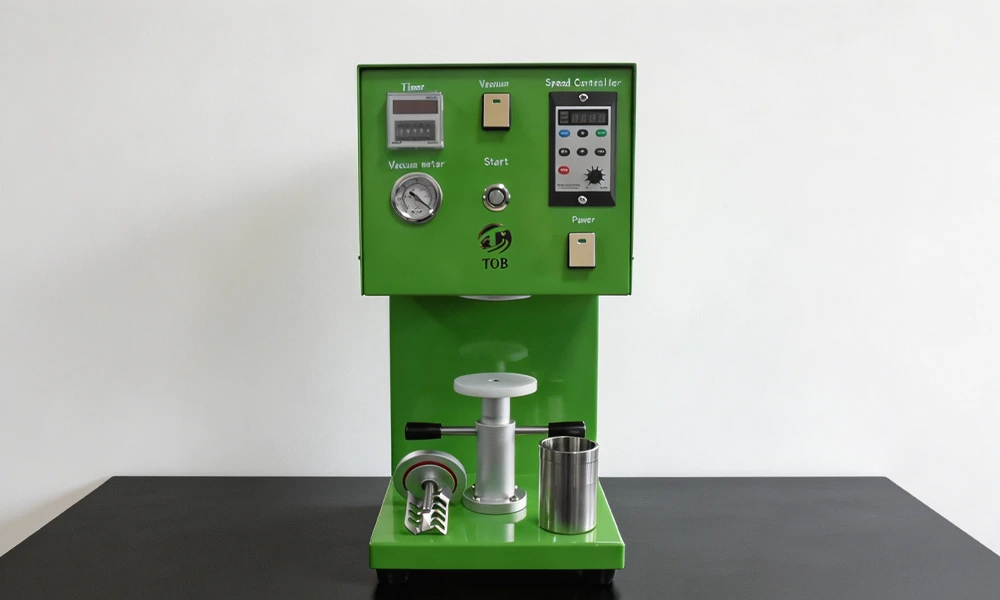
Caso di guasto documentato: Un laboratorio che utilizza un agitatore a piastra riscaldante per la preparazione della sospensione NMC811 ha registrato una deviazione standard della capacità del 12% su 200 celle. La colpa è stata attribuita alla polvere del catodo. La causa principale era una dispersione inadeguata durante la miscelazione. Sostituendo l'agitatore con un Miscelatore planetario sottovuoto da laboratorio con capacità di 100–500 mL la capacità ha risolto la varianza in un singolo lotto.
2. Rivestimento dell'elettrodo: l'uniformità dello spessore determina la capacità
Il rivestimento determina la capacità areale. Quando la distanza tra le lame del raschiatore varia di 10 μm, il carico di materiale attivo varia di circa l'8%. Ciò si traduce in una variazione di 0,4 mAh in una cella a bottone, dove l'obiettivo è di 2,5 mAh.
Confronto tra metodi di rivestimento per laboratori di ricerca e sviluppo:
|
Metodo |
Fascia di costo delle attrezzature |
Uniformità dello spessore |
Applicazione appropriata |
|
Lama del dotto (manuale) |
$200–500 |
±8% |
Solo screening iniziale del materiale |
|
Macchina per la spalmatura di pellicole con letto sottovuoto riscaldato |
$3.000–8.000 |
±2% |
Ricerca e sviluppo riproducibili, test su semicelle |
|
Rivestitore a fessura mini |
$15.000–30.000 |
±1,5% |
Sviluppo del processo su scala pilota |
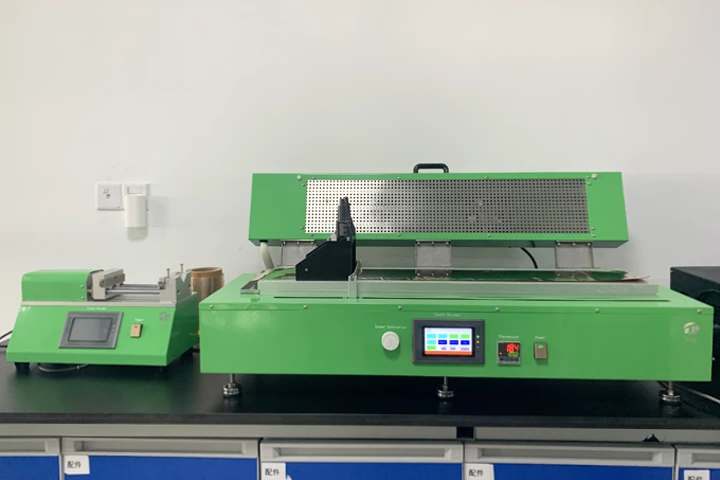
Per i laboratori di ricerca e sviluppo universitari e industriali che realizzano batterie a bottone, un sistema di rivestimento a letto riscaldato con altezza della lama regolabile al micrometro (intervallo 0-5 mm, risoluzione 1 μm) rappresenta il compromesso ottimale tra funzionalità e costi.
Controllo di qualità critico: Lo spessore del rivestimento deve essere misurato in cinque punti su ciascun elettrodo. Se lo spessore del bordo supera una deviazione del 5% rispetto al centro, la lama non è parallela al substrato. È necessario utilizzare spessori. Accettare questa variazione introduce un errore sistematico in ogni cella successiva.
Approfondimento ingegneristico: L'assottigliamento dei bordi su un elettrodo di ricerca e sviluppo largo 50 mm può sembrare trascurabile. Tuttavia, se scalato a una larghezza di rivestimento di 300 mm per la produzione pilota, quello stesso difetto del 5% sui bordi si trasforma in una striscia di scarto di 15 mm su entrambi i lati. La resa cala prima ancora che la linea pilota entri in funzione. Apparecchiature di rivestimento da laboratorio con teste a lama regolabili al micrometro. e la verifica di un parallelismo inferiore a 2 μm sull'intera larghezza del rivestimento garantisce che i parametri di processo vengano trasferiti direttamente dalla ricerca e sviluppo alla scala pilota.
3. Asciugatura dell'elettrodo: la cinetica di rimozione del solvente è importante
La velocità di asciugatura influisce direttamente sulla distribuzione del legante. Quando il solvente evapora troppo rapidamente, il legante PVDF migra verso la superficie dell'elettrodo. Il risultato è uno strato ricco di materiale attivo all'interfaccia del collettore di corrente con adesione insufficiente, che porta alla delaminazione.
Protocollo di essiccazione standard per la ricerca e sviluppo:
- 60–80 °C per sospensioni NMC a base di NMP
- 80–100 °C per sospensioni acquose di LFP
- Minimo 4 ore, in genere durante la notte, sotto vuoto
Un forno di essiccazione sottovuoto con stabilità di temperatura di ±1°C è un requisito imprescindibile. I forni da laboratorio standard con oscillazioni termiche di ±10°C producono elettrodi con distribuzioni di legante non uniformi, non rilevabili visivamente ma che si manifestano come variazioni di capacità durante i cicli di carica/scarica.
4. Calandra degli elettrodi: obiettivi di densità compattata
Gli elettrodi dopo l'essiccazione risultano porosi. Un'eccessiva porosità riduce la densità di energia volumetrica e compromette la conduttività elettronica. Una porosità insufficiente impedisce un'adeguata bagnatura dell'elettrolita.
Obiettivi di densità di compattazione standard del settore:
- Catodi NMC: 2,8–3,4 g/cm³
- Anodi di grafite: 1,4–1,6 g/cm³
- Catodi LFP: 2,2–2,6 g/cm³
UN pressa a rulli di precisione Il controllo calibrato della pressione è obbligatorio. Sia la distanza tra gli elettrodi che la forza applicata richiedono controllo e ripetibilità.
Caso di guasto documentato: Una startup ha completamente evitato la calandratura durante la fase iniziale di ricerca e sviluppo, con l'intenzione di "ottimizzare in seguito". Le celle a bottone hanno fornito una capacità inferiore del 40% rispetto a quella teorica. Il catodo non calandrato conteneva un volume morto che l'elettrolita riempiva senza accedere al materiale attivo. Sei mesi di riformulazione del materiale non hanno prodotto alcun miglioramento perché la causa principale risiedeva nell'apparecchiatura, non nel materiale.
5. Punzonatura degli elettrodi: eliminazione delle bave
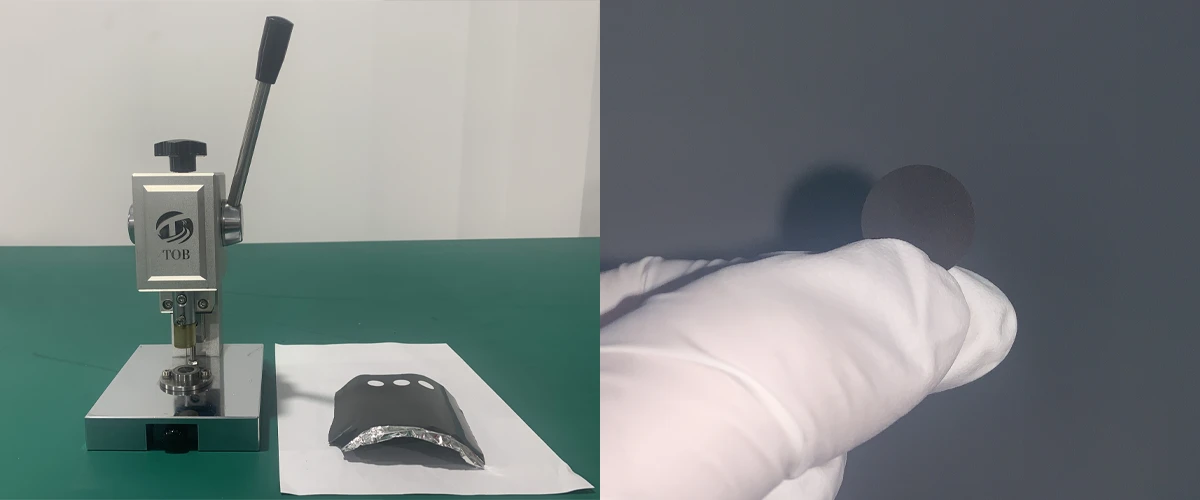
Gli elettrodi delle pile a bottone vengono punzonati fino a raggiungere diametri di 14-16 mm. Una matrice di punzonatura smussata o disallineata produce bave sui bordi. Queste bave penetrano nel separatore durante la crimpatura, creando micro-cortocircuiti che si manifestano come bassa tensione a circuito aperto o rapida autoscarica.
Requisiti dell'attrezzatura: Punzonatrice di precisione con matrici intercambiabili (14 mm, 15 mm, 16 mm). Gli elettrodi punzonati non devono presentare sbavature visibili con un ingrandimento ottico di 10×. Le matrici richiedono un'affilatura o una sostituzione periodica, un'operazione di manutenzione spesso trascurata nei laboratori accademici.
6. Vano portaoggetti: specifiche per il controllo dell'atmosfera
Il litio metallico reagisce con l'acqua. L'elettrolita reagisce con l'acqua. Qualsiasi infiltrazione di umidità durante l'assemblaggio della cella la compromette in modo irreversibile.
Specifiche minime per la camera a guanti per ricerca e sviluppo:
- O₂ < 0,1 ppm
- H₂O < 0,1 ppm
- Progettazione a due stazioni con anticamera
- Analizzatori integrati di O₂/H₂O
- Sistema di purificazione con capacità di rigenerazione
Realtà di bilancio: Un corretto Grado batteria camera a guanti Un sistema di purificazione del gas con capacità di rigenerazione ha in genere un costo compreso tra 15.000 e 25.000 dollari. Le unità più economiche spesso richiedono la sostituzione della cartuccia di purificazione ogni 6 mesi anziché ogni 3 anni, annullando di fatto il risparmio iniziale a causa dei costi dei materiali di consumo.
7. Assemblaggio della batteria a bottone: precisione della pressione di crimpatura
La crimpatura è la fase meccanica finale. La pressione determina direttamente l'integrità della tenuta e il contatto interno.
Requisiti di pressione di crimpatura per CR2032: 600–800 psi, calibrato in base al materiale specifico della guarnizione e alla configurazione della cella.
Confronto tra le tipologie di pressione:
|
Tipo di stampa |
Fascia di costo |
Consistenza della pressione |
Migliore applicazione |
|
Pressa a crimpare manuale |
$500–1.000 |
±15% |
Formazione iniziale a basso volume |
|
Pressa pneumatica per crimpatura |
$2.000–4.000 |
±3% |
Attività di ricerca e sviluppo regolari, >50 celle/settimana |
|
Pinza crimpatrice elettrica con feedback di pressione |
$5.000–8.000 |
±1% |
Dati di qualità adatta alla pubblicazione, qualificazione per l'ampliamento su scala industriale. |
Per i laboratori che producono più di 50 cellule a settimana, una pressa pneumatica è il minimo pratico. Per coloro che pubblicano dati sottoposti a revisione paritaria o materiali qualificanti per l'ampliamento pilota, un pinza elettrica per pile a bottone La registrazione digitale della pressione garantisce la tracciabilità necessaria.
Pronti a costruire il vostro laboratorio? Un laboratorio di celle a bottone è un sistema integrato, non una collezione di singoli strumenti. Un componente non conforme alle specifiche – una pinza crimpatrice imprecisa, una camera a guanti con perdite di umidità, un miscelatore incapace di una corretta dispersione – e l'intera pipeline di ricerca e sviluppo genera rumore anziché dati utilizzabili. TOB New Energy fornisce Attrezzatura completa da laboratorio per batterie a bottone fornitore di pacchetti chiavi in mano per l'intrattenimento a oltre 2.000 istituti di ricerca e produttori di batterie in tutto il mondo, con linee di laboratorio pre-commissionate, installazione in loco e formazione degli operatori inclusi di serie.
Domande frequenti (FAQ)
D: Qual è l'attrezzatura minima necessaria per assemblare la prima batteria a bottone?
A: Bilancia di precisione, miscelatore sottovuoto (o mortaio e pestello per le prove iniziali), macchina per la deposizione di lame racle, forno sottovuoto, punzone per elettrodi, camera a guanti e pressa manuale per crimpatura. Budget: 20.000-30.000 dollari per una configurazione di base funzionale.
D: È necessario un forno sottovuoto per l'asciugatura degli elettrodi, oppure è sufficiente l'asciugatura all'aria?
A: È necessario un forno sottovuoto. L'essiccazione all'aria in condizioni ambientali introduce umidità che degrada le prestazioni dell'elettrolita. L'essiccazione sottovuoto a 60–100 °C sotto -0,08 MPa rimuove il solvente residuo e l'umidità adsorbita. Una perdita di capacità del 15–20% è tipica quando questo passaggio viene omesso.
D: Quante cellule per condizione sono necessarie per ottenere dati statisticamente significativi?
A: Minimo 5 celle per condizione; 10 sono preferibili. Gli studi pubblicati che utilizzano n=3 falliscono regolarmente la replicazione. Nella ricerca e sviluppo industriale, meno di 8 celle per set di parametri sono considerate insufficienti per le decisioni di processo.
D: La stessa camera a guanti può essere utilizzata sia per la ricerca sugli ioni di sodio che per quella sugli ioni di litio?
R: Sconsigliato. Il sodio reagisce in modo più violento con l'umidità rispetto al litio. A meno che non vengano mantenuti rigorosi protocolli di decontaminazione e separazione atmosferica tra le diverse sostanze chimiche, si raccomanda vivamente l'utilizzo di glovebox dedicate per ciascuna sostanza chimica al fine di prevenire la contaminazione incrociata e incidenti.
Questa guida tecnica è stata preparata dal team di ingegneria di processo presso TOB New Energy , un produttore diretto di apparecchiature complete per laboratori di batterie, dalle pile a bottone ai modelli pilota, con sede a Xiamen, in Cina. Le apparecchiature vengono progettate, prodotte, testate e spedite da un unico stabilimento, senza rivenditori, intermediari o ricarichi.
 iscriviti a noi